Every time I meet a business owner in Türkiye, I get the same questions.
Who are you? Why do you do this work? How do you work?
The real question behind all of them is simpler: why should I trust you?
It’s a fair question. The international development consulting space is full of people who will talk to you about foreign markets without ever having truly operated in one. Decks built on research. Strategies built on frameworks. Advice built on theory.
I want to answer that question properly. Not in a few lines on a profile. In full.
People with this kind of hands-on, cross-cultural, cross-industry experience in international expansion are rare in this market. Working with me means working with someone who brings a different culture, a different vision, and a different way of seeing your business. I will challenge your assumptions. That’s not a side effect — it’s part of the value.
This is the story behind Wukong Consulting, and the methodology that grew from it.
Chapter 1 — China: Where It All Began
My career started with a dive into the unknown.
Freshly graduated. Little experience. I arrived in China 18 years ago with 5,000 EUR in my pocket — earned through small jobs and savings — and a tourist visa. Clock ticking. No safety net. No friends. No family. Just a city of 20 million people and a deadline.
I found a place. I found a job. And China did the rest.
I started from the bottom, working in sales and marketing for Chinese companies. That meant learning Chinese-style management — sometimes the hard way — and understanding how business really moves in a fast-paced, unforgiving market.
A few years later, I joined the French Chamber of Commerce in China as Head of Business Services. The mission was clear: reform the department and grow it. Over the years that followed, my team and I worked on more than 500 projects — feasibility studies, sourcing missions, distributor searches, partner background checks, trade delegations. Along the way, I probably interacted with close to a thousand companies.
But if I’m honest, my favourite part of the job was the delegations.
There’s something I loved about that particular kind of organised chaos — a group still in the air, landing in a few hours, and two meetings on the schedule still unconfirmed. Everything to coordinate, everyone to manage, no room for error. And then, after a long day of back-to-back appointments, finding a bar somewhere in Shanghai where you could watch France play rugby with a business owner who just wanted a real conversation instead of four walls and room service. Those side moments — the ones nobody puts in a report — that’s where the real trust was built.
That period was probably the richest of my career. Not because everything worked. But because I learned constantly — from market realities, from companies’ experiences, and from my own mistakes.
I also grew up there. I arrived at 23 and left at 33. China is where I became an adult — professionally and personally. I burned the candle at both ends, travelled through Asia, and built friendships that became family. When you’re far from your roots, you learn to create your own inner circle.
But over time, a frustration started to grow.
We were supporting companies through only a fraction of their journey. A feasibility study. A partner search. A trade mission. Then the real operational challenges would begin — and we’d step away just as things got complicated.
I wanted to experience the full cycle myself.
So I left the Chamber and joined an industrial company developing its business in China. Advisory became execution. I managed direct sales, after-sales operations, and the constant tension between what headquarters believes about a market and what you actually see on the ground. In international business, you quickly learn: you don’t just sell to your customers. You also have to sell internally.
After 10 years, a new question emerged: what next? Two options — relocate to Southeast Asia, or return to France and launch a startup project that had been taking shape in my mind for months. In both cases: stepping into the unknown. Again.
Chapter 2 — France & Tunisia: Running a Business From the Inside
I didn’t return to France. I retreated to it.
August 2018. China ended the way you never want a chapter to end — laid off, a relationship finished, all within the same week. I packed my life into luggage and boarded a plane back to Paris. Back to my mother’s house. Back to zero, or so it felt.
Three months later, winter arrived. And so did the depression.
I won’t skip past this. It hit hard. No income, no independence, no China. Everything I had built over ten years — the network, the identity, the daily rhythm — gone. And yet I had a startup to launch, a partner counting on me, investors to convince. I had to pitch our vision day in, day out, while barely being able to face myself in the mirror.
I still got it done. Nearly 100,000 EUR in funding secured. First clients signed to develop our use cases. An embryo of a pipeline. Objectively, progress.
But my head wasn’t in the game. I was closed off, fighting change, fighting everything. Tensions with my partner grew until they became unworkable. I sold my shares and stepped out.
About a month later, COVID shut down the world.
In a strange way, the lockdown gave me something I didn’t know I needed — permission to stop. I took care of myself. Sports, diet, reading, thinking. A forced pause that turned out to be necessary. And during that pause, I met someone. A Turkish diplomat, based in Paris to represent Türkiye at UNESCO. We bonded over something specific: the expat experience. That particular feeling of building a life somewhere that wasn’t supposed to be yours. We understood each other immediately.
With borders closed and my back-up plan to move to South America off the table, I needed to work. I eventually landed a GM role at a small SME — a printing company, not the sexiest industry, but the owner was eccentric, ambitious, and genuinely open to change. And the company had a factory in Tunisia.
So there I was. Immersed in another culture. Again.
What I had learned from China — how to find the similarities underneath the surface differences, how to earn trust before demanding change — I put all of it to work. The Tunisian team was talented but operating without structure. The company was growing but losing customers as fast as it gained them. For every problem solved, another one was waiting downstream.
We went department by department. Reviewed every process. Raised quality standards to meet French market expectations. Worked on change management, logistics, sales, production, even public tenders. Unglamorous, granular, essential work.
That experience taught me something I already suspected but now knew in my bones: structure is not a luxury. Without it, growth becomes a trap.
I also understood, for the first time from the inside, what it means to run a business when cash is tight and every decision carries real weight. That stays with you. It changes how you work with people.
Meanwhile, my partner was eventually reassigned. Ankara was calling her home.
June 2022. One-way ticket to Ankara. The story repeats itself.
But this time was different. I wasn’t arriving with 5,000 EUR and a tourist visa. I was arriving with experience, a network, and a foundation. And for the first time in years, I knew exactly who I was.
Chapter 3 — Türkiye: The Accident That Changed Everything
I arrived in Türkiye by accident.
Türkiye was never in the plan. After France, my eyes were on South America — Colombia specifically. A new territory, a promising market, the adventurer in me already leaning toward the next horizon.
But life had other plans. So I bought a one-way ticket to join the one who would soon become my wife. Still without knowing much about Türkiye, to be honest. That jump into the unknown — once again.
What surprised me was how quickly Ankara felt like home. There’s something about the city — the scale, the energy, the texture of daily life — that reminded me of Beijing. My body relaxed before my mind had even caught up. I enrolled in Turkish classes at TÖMER and got to work on the language. It’s still a work in progress. Turkish is genuinely difficult and I won’t pretend otherwise — but it’s improving, yavaş yavaş.
The professional question, though, was real. My wife’s career as a diplomat means rotations. Telling a recruiter “hire me, I might leave in 18 months” is not a conversation that ends well. So a traditional job was never seriously on the table. The logical path was my own business — and with everything I had accumulated, consulting made complete sense.
I just needed a spark. It came from an unexpected direction — former partners reached out, they had work, and two projects landed almost simultaneously. So I created a company. You need one to send an invoice, after all.
Those first missions were an education in themselves. The sourcing project took me across the country — Istanbul, Denizli, conversations with suppliers, first-hand lessons in Turkish business culture, customs clearance, logistics flows. The second project grew into something much larger — establishing a full distribution operation in Istanbul, from business plan to open doors. I probably learned more about doing business in Türkiye during that period than most people absorb in years.
But beyond the work, something else was happening. I was falling in love with the country itself — its history, its culture, its people, its food, its landscapes, the sheer scale of what this place can offer. It took me back to what I had felt arriving in China for the first time. That sense of being truly alive in a place that constantly surprises you.
I said earlier that China is where I became an adult. Türkiye gave me something different. It gave me a family.
Then, almost all at once: twin babies arrived. A move to Italy, where my wife was assigned. And somewhere in the middle of all that, I was still quietly finishing a recovery that had started back in those dark French winters.
Processing all of it at the same time was a lot. China exit. Startup. Depression. COVID. Türkiye. Twins. Italy. All of it compressed into roughly five years.
Italy gave me something unexpected — space. For the first time in years, I could think clearly about what I was actually building. So I sat down and did for Wukong what I had done for every company I had ever worked with: I structured it. Defined the service portfolio. Identified the right clients. Built the strategy. Formalized the methodology. And used the explosion of AI and automation tools to build systems that would let one person do the work of three.
Why Wukong?
The name was never random.
Sun Wukong — the Monkey King — is one of the great characters of Chinese mythology. Unconventional, rebellious, witty, and fiercely loyal to the people he travels with. I speak my mind, even when it’s uncomfortable, even when it’s against my own interest. I don’t do status quo. But the people I commit to — I don’t abandon.
There’s also a more personal connection. I practiced wushu for years, specializing in monkey boxing. In French martial arts circles, that was my nickname — the Monkey King.
And then there’s the story itself. In Journey to the West, Wukong serves as a bodyguard for a monk traveling from China to India to bring back Buddhist scriptures. An international mission, full of obstacles, requiring adaptability, courage and loyalty at every step. When I read that back through a business lens — it’s not so different from what I do. I travel alongside my clients through unfamiliar territory. I help them avoid the risks they can’t see yet. I don’t leave when things get hard.
That’s Wukong Consulting.
Chapter 4 — The D.A.R.E.D Journey: A Methodology Built From Experience
Funny thing is — right now, I’m applying my own methodology to myself.
After everything in the last three chapters — China, France, Tunisia, Türkiye, Italy — I had to do what I’ve always done with every company I’ve worked with: stop, structure, and build something that lasts.
That process gave birth to the D.A.R.E.D Journey.
Every chapter of my career had a common thread. A company hitting a ceiling in China because it didn’t understand the market it was entering. A startup pivoting because the initial assumptions didn’t survive contact with reality. A factory in Tunisia losing customers as fast as it gained them because the structure couldn’t support the growth. A distribution company in Istanbul built from scratch, where every mistake had a real price tag.
What I kept seeing, over and over, was the same pattern. Companies brave enough to move — into a new market, a new model, a new phase of growth — but without a framework to de-risk the journey. They were daring. But they were doing it alone.
That’s the gap Wukong was built to close.
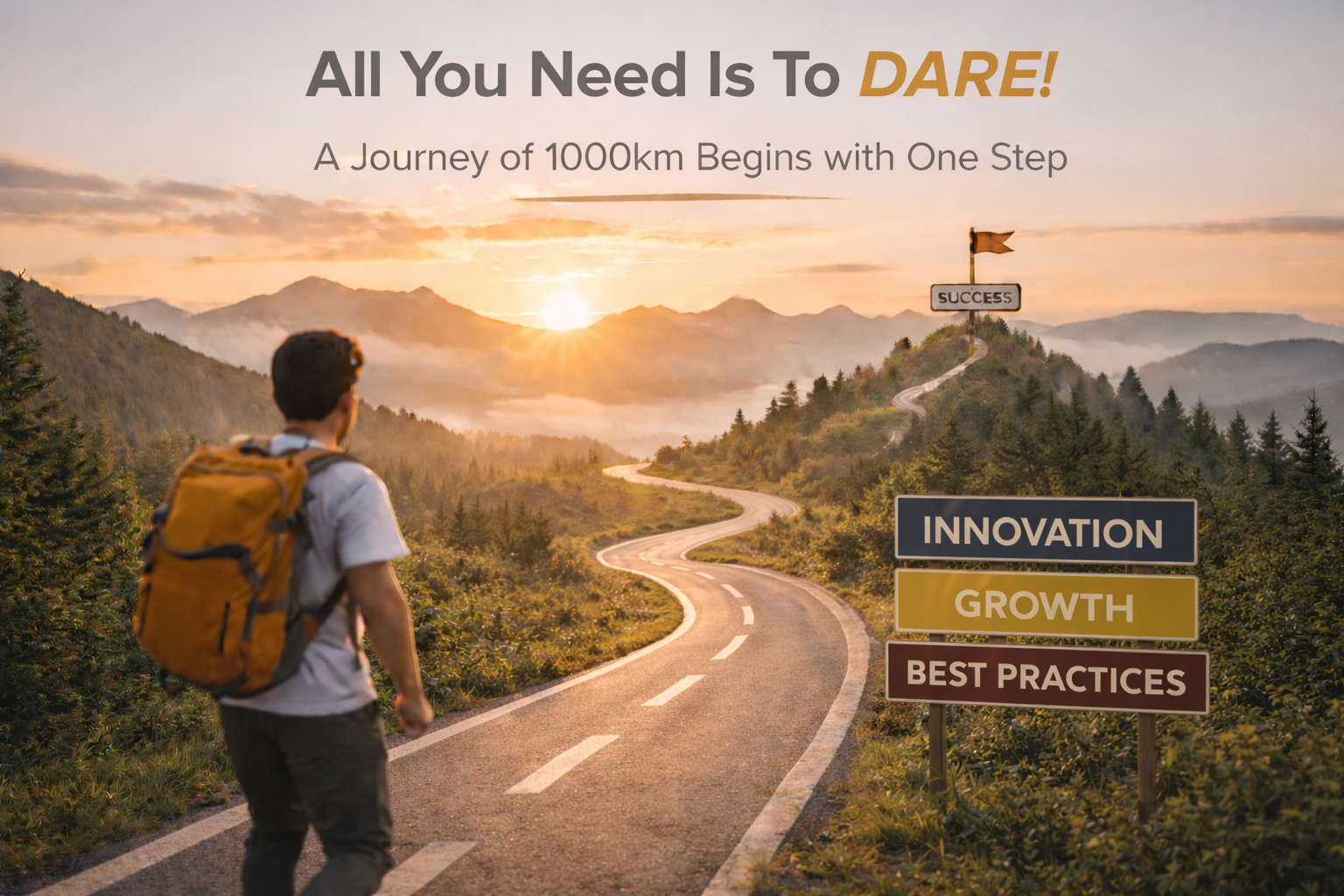
International expansion is not just a growth strategy. It’s a transformational journey. Done right, it forces a company to sharpen its processes, absorb best practices, innovate, and become genuinely stronger. But you have to dare to jump in. And you don’t have to jump alone.
That’s why the methodology is called the D.A.R.E.D Journey.
D — Diagnose
Before anything else, we assess your company’s real readiness to enter a foreign market. Product-market fit, financial capacity, operational readiness, regulatory and compliance requirements. We look at your ambitions honestly and compare them to the reality on the ground. This phase ends with a clear go/no-go decision. If the timing isn’t right, we’ll tell you. That’s not failure — that’s the whole point.
A — Analyse & Align
We run a market analysis built around your specific situation — not the general market potential, but your realistic potential in that market. We identify the right positioning, the right segments, the real competitive landscape. Strategy without alignment is just a document. We make sure everyone is pointed in the same direction before we move.
R — Roadmap
We design your go-to-market strategy with a concrete action plan and a realistic budget. Investment, marketing, business development activities — everything mapped, nothing left vague. You leave this phase knowing exactly what you’re committing to and what you can expect in return.
E — Execute
This is where most consultants hand you a report and wish you luck.
We don’t.
We work alongside you during the execution phase — at least six months — running business development activities, measuring traction, and staying accountable for results. Not as an external voice offering advice from a distance. As a partner on the ground.
D — Debrief & De-risk
Strategy is a baseline, not a bible. As we execute, the market talks back. We listen. We give constant feedback, adapt when needed, pivot when necessary — and if something fundamentally isn’t working, we say so clearly and help you exit cleanly. International business requires agility. A methodology that doesn’t account for that is just wishful thinking.
What Happens at the End
The full journey typically runs eight to twelve months. But it doesn’t end at month twelve.
At the end of the journey, we go through a final decision gate. Based on results, we stop, we continue, we correct, or we accelerate. No ambiguity. No dragging things out for the sake of it.
Depending on where you are, we can continue as your in-market representative, train your internal team to own the process, support local company setup, recruit local talent, or provide EoR services.
We don’t just build something with you and then disappear. We hand you the keys and the blueprint. Whatever the outcome of the journey, you walk away with something tangible — a market database, a rigorous assessment of your operations, concrete recommendations, lessons that belong to you permanently.
Two Principles That Sit Underneath All of This
The first is that strategy and execution are not separate services — they are one continuous process. Strategy gives direction and prevents you from wasting resources chasing everything at once. Execution makes you accountable. Feedback makes you agile. That’s the startup mindset applied to international development: ship, listen, adapt, win.
The second is that we always leave you room to exit. Cost control matters. Timing matters. Sometimes the right move is to pause, get a certification, fix an internal process, and re-enter stronger. The go/no-go gate isn’t a formality — it’s a genuine commitment to your success over our billing.
We are not here to sell you a report. We are here to travel with you.
When we don’t know something, we find out. When we make a mistake, we correct it — fast. We are loyal to the people we engage with, unconditionally.
That’s not just a service promise. For anyone who has read this far — you’ll recognise it’s simply who I am.
The D.A.R.E.D Journey is ready. The question is whether you are.