
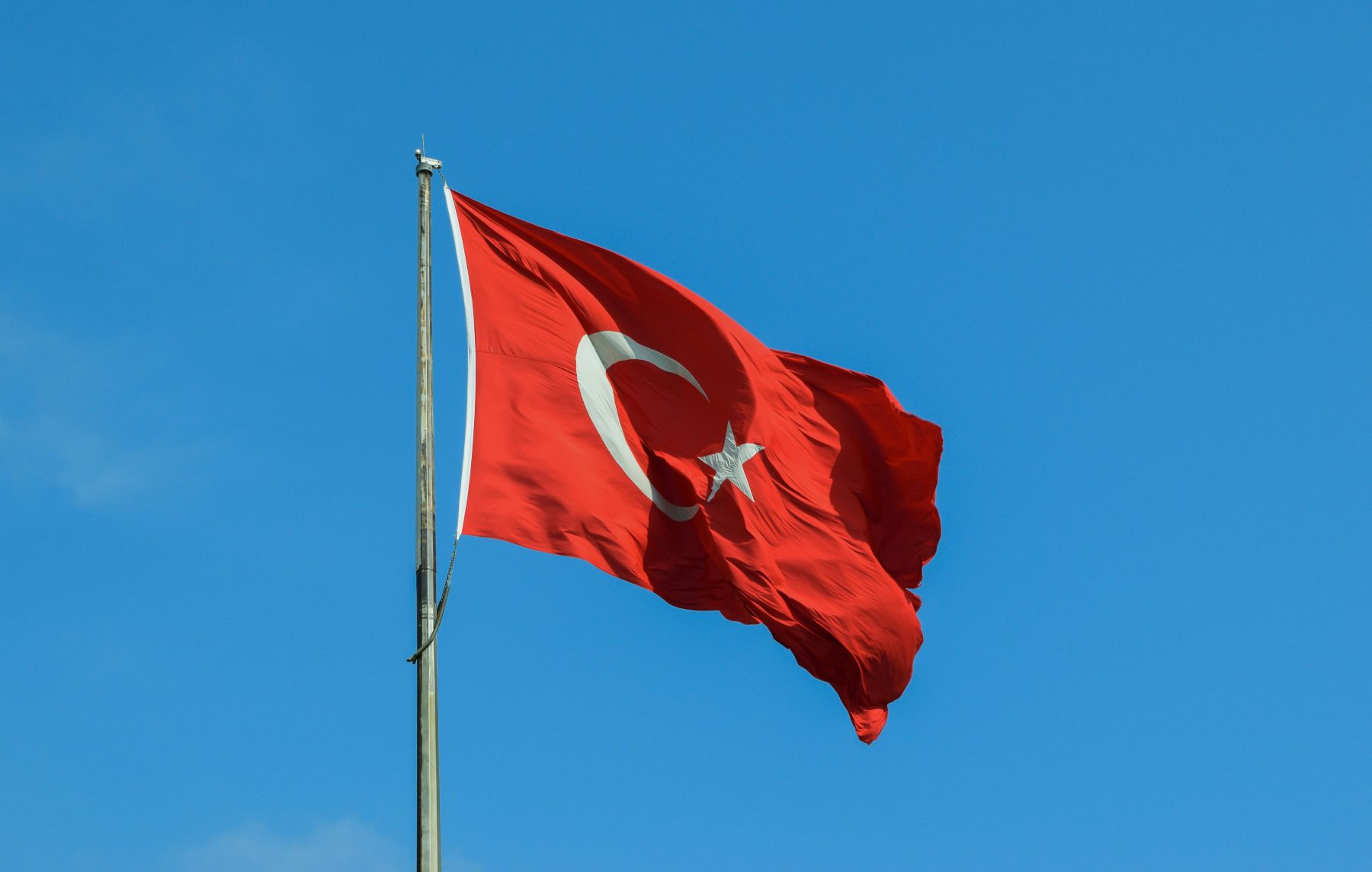
Türkiye does not punish companies for arriving unprepared. It simply lets them find out the hard way, twelve months and one failed distributor agreement later.
This guide sets out what actually has to happen, in the right order, for a European company to register, capitalise and start operating in Türkiye: the legal vehicles available, the steps between decision and first invoice, and the mistakes that quietly derail otherwise solid market entries.
Why Türkiye Is Worth the Effort
The numbers explain why European companies keep coming back to this market. By the IMF’s October 2024 World Economic Outlook, Türkiye’s economy grew 5.5% in 2024 to reach $3.456 trillion measured at purchasing power parity, holding 12th place in the global ranking. That is not a sales pitch Wukong is running; it is the baseline most serious market entry decisions in Europe are now being built on.
Purchasing power has moved in step. GDP per capita on a purchasing-power-parity basis reached $35,449 in 2024, and that growth has produced a middle class that increasingly buys European brands, machinery and services rather than substituting for them with cheaper local alternatives.
Then there is the Customs Union with the EU. Türkiye abolished customs duties on industrial goods and adopted the EU’s Common Customs Tariff as of 1 January 1996, giving goods manufactured in Türkiye tariff-free access to a market that Eurostat put at 450.4 million consumers as of 1 January 2025. For manufacturers weighing up a production base, this single fact often carries more weight than any tax incentive on offer.
Tax competitiveness reinforces the case. Türkiye’s corporate tax regime, combined with a deep network of double taxation treaties, makes the headline rate less punishing than many European finance teams initially assume once credits, deductions and sector incentives are factored in. Logistics infrastructure tells a similar story: Istanbul’s position at the crossing point of European, Middle Eastern and Central Asian trade routes is not a marketing line, it shows up directly in shipping times and freight costs for companies that manufacture or distribute regionally.
Talent availability matters as much as market size for companies actually staffing up a Turkish entity, and it is the variable most European board papers skip entirely. Türkiye graduates large numbers of engineers, software developers and multilingual commercial staff each year, and Istanbul in particular has become a credible alternative talent pool for companies that have struggled to hire competitively in Western Europe. Salary expectations remain meaningfully lower than EU benchmarks for comparable skill levels, though that gap has narrowed faster than many companies’ two-year-old budget assumptions account for, particularly in software and finance roles where competition for senior talent is now genuinely tight. Building a realistic compensation plan around current market rates, rather than outdated reference points carried over from an initial feasibility study, avoids a frustrating first year of turnover just as the entity is starting to gain traction.
None of this makes the market easy. It makes the upside real enough that the question European boards are asking has shifted: not whether to look at Türkiye, but how to enter without repeating the mistakes that have tripped up the companies that went before them.
Choosing the Right Legal Vehicle
Turkish commercial law, overhauled significantly since 2011, gives foreign investors several ways to establish a presence. The right one depends on how much commitment, capital and operational control the entry requires, not on what a template proposal recommends by default.
Joint Stock Company vs. Limited Liability Company
Most European entrants choose between an Anonim Şirket (joint stock company) and a Limited Şirket (limited liability company). Both can be incorporated with a single shareholder, of any nationality, and neither requires prior governmental consent outside regulated sectors such as banking or energy.
The joint stock structure suits companies planning to scale, bring in additional investors, or eventually go public: shares transfer with fewer formalities, and governance follows a board of directors. The limited liability structure is simpler to manage day to day and works well for a contained, single-purpose entry, though share transfers and certain shareholder decisions carry more procedural weight.
Both forms carry the same practical reality for shareholders: liability is generally limited to capital contributed, except for unpaid public debts such as tax and social security premiums, where exposure can extend further. This is a detail worth getting right with local counsel before, not after, the entity is registered.
Minimum capital requirements are modest by European standards, which surprises companies that assumed Türkiye would demand heavier upfront commitment than France or Germany. The real cost driver is rarely the share capital itself; it is the operational layer that follows incorporation, from office leases to the first year of payroll.
Branch and Liaison Offices for a Lighter Footprint
Companies that want to test the market before committing capital have two lighter options. A branch office can conduct commercial activity directly under the foreign parent’s name, authorised by a board resolution rather than a new incorporation, though it remains off-limits in certain regulated sectors.
A liaison office goes further still: it exists purely for market research and feasibility work, cannot generate revenue, and is the standard first move for companies that want boots on the ground in Türkiye while the real decision is still being made. It is not a substitute for a registered entity once commercial activity starts, but it buys time and local insight cheaply.
The choice between these four vehicles should follow the commercial plan, not the other way around. A manufacturer planning a multi-year production investment has different needs than a software company testing demand for a localised product. Wukong’s first conversation with a prospective entrant is almost always about this fit, well before any document is drafted.
The Step-by-Step Entry Process
Türkiye has worked deliberately to shorten the distance between decision and operation. Company registration is now handled as a one-stop shop at Trade Registry Directorates, with the process completed within the same day, faster than most EU peers. The process itself, however, still rewards sequencing it correctly.
Step 1: Validate the Opportunity Before You Commit
Before any paperwork, the questions that matter are commercial, not legal: who buys this in Türkiye, at what price, through which channel, and against which local or international competitor. Market sizing built on European assumptions consistently overstates demand in some sectors and misses it entirely in others. This is the diagnostic work that should happen before a lawyer is ever engaged.
A short, structured field trip beats a desk study every time. Meeting three or four potential distributors, two competitors’ resellers and a handful of target customers in person, in Istanbul or Izmir or Ankara depending on the sector, surfaces more usable information in a week than months of remote research. Companies that skip this step tend to discover the gaps only after the entity is registered and the lease is signed.
Step 2: Choose the Legal Vehicle and Draft the Founding Documents
Once the entry model is clear, the articles of association are drafted to reflect it: capital structure, governance, and share transfer rules should match the actual plan for the business, not a generic template. Foreign legal entity shareholders need a notarised extract detailing their incorporation date, share capital and activity, obtained in their home jurisdiction in advance.
This is also the point at which to decide who actually signs for the company day to day. Power of attorney arrangements for a Turkey-based manager, scope of authority, and whether headquarters retains veto rights on specific decisions should all be written into the founding documents rather than handled by informal understanding. Informal understandings are exactly what tend to break down under pressure, months later, once real money is moving.
Step 3: Register, Capitalise and Open the Bank Account
Registration happens at the trade registry covering the company’s intended registered office, and requirements vary slightly by location. A joint stock company must show evidence that at least 25% of subscribed capital has been deposited; a limited liability company does not carry this requirement. A small payment to the Competition Authority, calculated on share capital, is also due at this stage.
Opening a corporate bank account has become the step most likely to cause delay, as Turkish banks have tightened compliance checks on foreign-owned entities in recent years. Coming prepared with the full corporate documentation chain, parent company structure, ultimate beneficial owner declarations and a clear explanation of the planned activity shortens this considerably. Companies that arrive without this preparation routinely lose two to three weeks at the bank alone.
Step 4: Build the Operational Layer
A registered entity is not an operating business. Tax identification numbers need to be secured for any foreign national acting as director or manager. Payroll, social security registration and a compliant employment setup follow. For companies not ready to commit to a full local team, an Employer of Record structure or a virtual office can bridge the gap between “we are registered” and “we are actually trading” without front-loading fixed costs.
Accounting and tax compliance in Türkiye run on a more frequent cycle than most European companies are used to: monthly VAT filings, withholding tax declarations and social security submissions all carry strict deadlines. Lining up a local accountant before the first invoice is issued, rather than after the first missed deadline, is one of the cheapest insurance policies available at this stage.
Step 5: Find the Right Local Partner
This is the step European companies most often underweight, and the one most likely to determine whether year one succeeds. A good partner, distributor or local hire does more for revenue than any incentive scheme. A bad one is expensive to discover and even more expensive to unwind. This is where most market entries are quietly won or lost.
Reference checks in Türkiye work differently than in Western Europe. A distributor’s own pitch deck and client list will look impressive regardless of actual performance; what matters is independently verified payment behaviour, warehouse capacity actually inspected in person, and conversations with two or three of their existing principals, not just the one they offer up as a reference. None of this is exotic. It is simply due diligence that gets skipped under time pressure, and almost always regretted later.
Incentives Worth Building Into the Plan
Türkiye’s investment incentive system, restructured again in 2025, offers tax deductions and exemptions across several tracks: manufacturing incentives tied to fixed investment thresholds, incentives for service exporters, employment incentives covering payroll and training support, and technology development zone benefits for R&D-intensive activity. None of these should drive the entry decision on their own, but layered onto a sound commercial case, they materially improve the economics.
Türkiye also offers protection through an extensive network of bilateral investment treaties and double taxation treaties, alongside a national FDI law that guarantees foreign investors the same treatment as domestic ones, detailed in invest.gov.tr’s Legal Guide to Investing in Türkiye. For a board weighing political and currency risk against the rest of the opportunity, that legal architecture matters as much as the incentive figures.
Eligibility for the manufacturing and R&D tracks is assessed against fixed investment thresholds and regional development priority zones, which means the same project can qualify for materially different support depending on where in the country it is sited. This is a planning variable, not a footnote: the difference between an incentivised region and a standard one can shift a project’s payback period by a year or more.
What Trips Up European Companies
The legal and fiscal groundwork is the easy part to get right, because it is documented and predictable. What consistently catches European companies off guard is everything that happens after registration: negotiations that move slower than expected, decisions that hinge on relationships rather than the term sheet, and a business culture that rewards patience over the fast close that works at home.
Companies that treat Türkiye as a slightly cheaper version of an EU market tend to misjudge timelines, over-rely on contracts at the expense of trust, and burn through their first local partnership faster than they should. The legal entry is necessary. It is not sufficient. The cultural and relational layer of doing business here deserves its own attention, and it is exactly where most generic market entry advice stops short.
Currency exposure is the other recurring blind spot. Pricing in euros while costs accrue in Turkish lira, or vice versa, without an explicit hedging or repricing policy, has eroded the margin on more than one otherwise well-run entry. This does not require a treasury department. It requires a decision, made early and revisited quarterly, about who carries the currency risk and how pricing adjusts when it moves.
Getting the Sequence Right
None of the individual steps above is especially difficult on its own. What makes Turkish market entry hard is sequencing them correctly, and not discovering a missed dependency three months in, after capital is committed and a launch date has already been promised internally.
Companies that get this right tend to do one thing differently: they treat the legal setup and the commercial groundwork as a single project, run in parallel, rather than a legal task followed by a commercial scramble.
How Wukong Helps
Wukong works the EU-Türkiye corridor in both directions, and market entry is where most engagements start. We diagnose whether the opportunity is real before recommending a single legal structure, build the roadmap, and stay on the ground through registration, partner sourcing and the first deals. If you are evaluating Türkiye and want a second opinion before committing capital, reach out and we will tell you honestly what we see.
Frequently Asked Questions
How long does it take to register a company in Türkiye?
Formal registration at the Trade Registry Directorate is now completed within the same day. Building the operational layer around it, banking, payroll, tax registration, typically takes longer than the registration itself.
Do I need a Turkish partner to set up a company?
No. Foreign investors can incorporate a joint stock or limited liability company with a single shareholder of any nationality, with no local partner requirement outside specific regulated sectors.
What is the difference between a branch office and a subsidiary?
A branch operates under the foreign parent’s name and legal identity, authorised by board resolution. A subsidiary, whether a joint stock or limited liability company, is a separate Turkish legal entity with its own liability profile.
Are foreign investors taxed differently from Turkish companies?
No. Türkiye’s FDI law guarantees foreign investors equal treatment with domestic investors, and the country maintains an extensive network of double taxation treaties to prevent foreign companies from being taxed twice on the same income, detailed in invest.gov.tr’s Legal Guide to Investing in Türkiye.